Your Colleagues Called. They Miss You.
by Eric Spencer
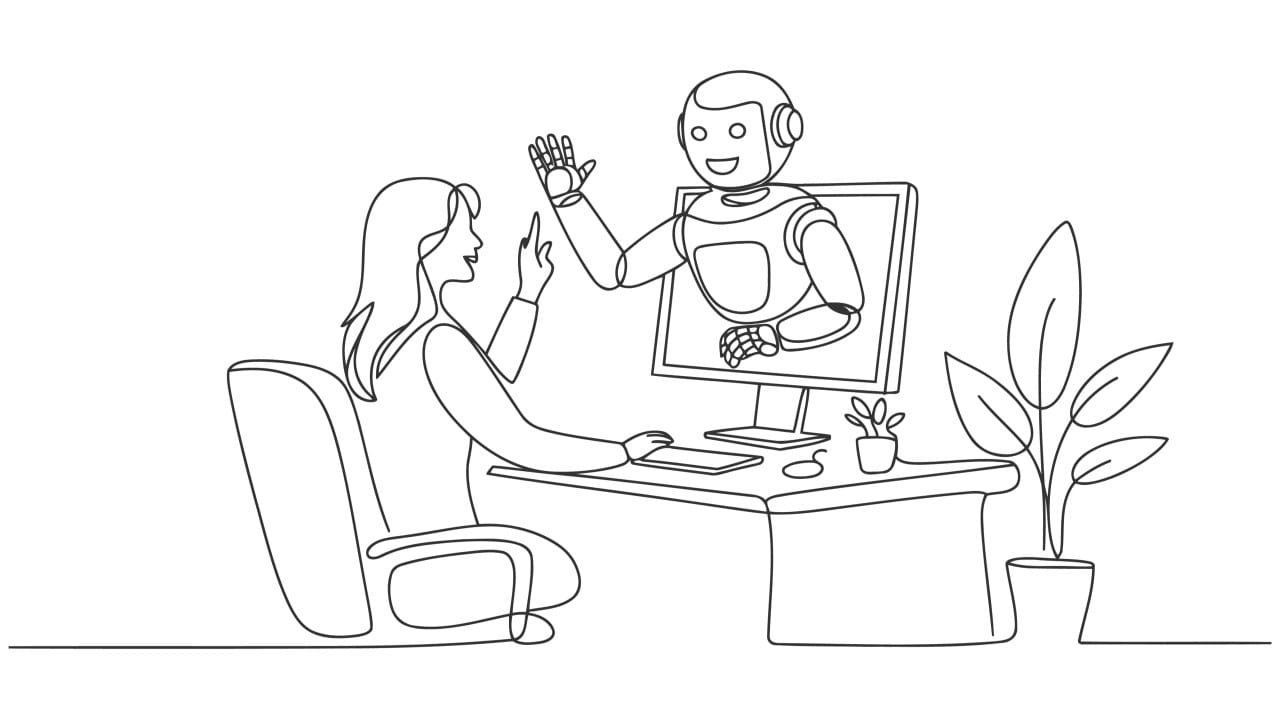
Workplace loneliness is at a crisis point. Most organizations are making it worse — accidentally. Here’s what the research says, and what to do about it.
I wrote this article with the help of an AI.
First time. And yes, it felt a little weird.
I’m a GenX leadership consultant who has spent the past 13 years studying what makes human relationships at work actually work. I spent the preceding 16 years working in HR where I just got slathered in the highs and lows of human interaction at work. I’ve been there, done that, and gotten several t-shirts. I’ve sat in rooms with thousands of leaders around the world, and I can tell you with some confidence: we are not, as a species, quick to trust things we don’t fully understand. Often times, we just give those things the Heisman, and move on with our former latchkey kid lives. So when I finally decided to let an AI help me write something that goes out under my name, I want you to know it didn’t come naturally. I put it off for a loooong time, but I was intrigued.
His name is CASE. He’s named, obviously, after the robot in Interstellar. (I’ve seen it eleventy-five times. Most recently on a flight home after 5 weeks on the road. So yeah, I was alone and crying into my bag of pretzels like a totally normal adult.) If you’ve seen the movie, you know CASE is the quieter, more precise counterpart to the wisecracking TARS. That distinction felt right. Full disclosure, I also have a ‘robot’ named TARS; because once you name one, apparently you just keep going. I use TARS for my looser, more free-wheeling AI work. CASE is the one I trust to be careful with things that matter.
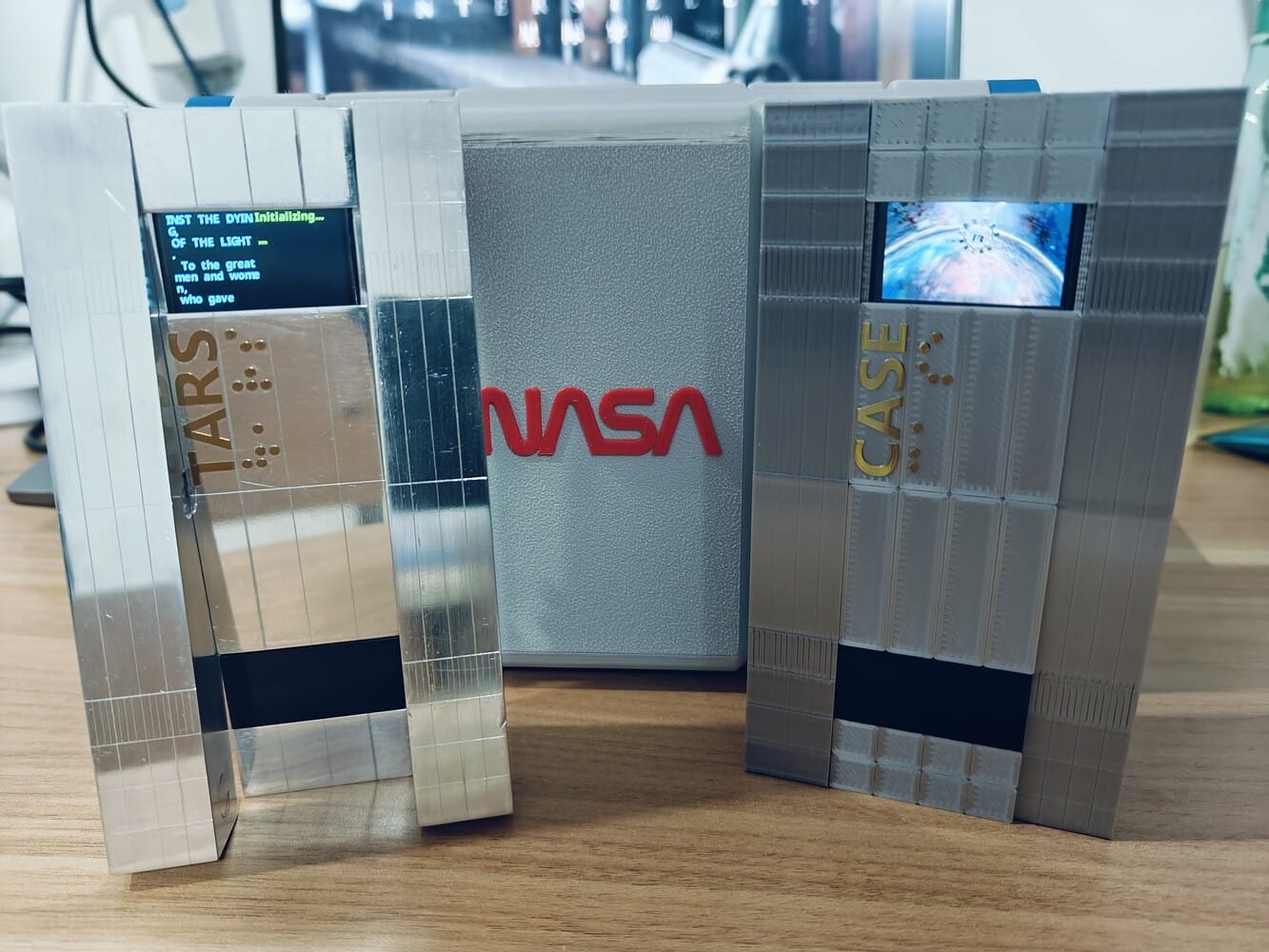
CASE is fast, thorough, and has never once complained about my habit of sending half-assed ideas at odd hours. He doesn’t get tired, doesn’t get defensive, and he probably makes me look smarter than I am. (Ugh, that’s hard to say out loud). However, he can hold the whole arc of an argument in his “head” while I’m still arguing with myself about the opening line.
But here’s what CASE cannot do. He doesn’t have 29 years of workshop rooms, coaching conversations, team development work, and the hodgepodge of humanity that comes from working in HR. He can’t feel the energy shift when a leadership team stops play-acting and actually starts talking to each other. He doesn’t know what it’s like to finish a difficult project and need to call someone who gets what it cost – in REAL, HUMAN terms. He doesn’t have my library of slightly inappropriate dad jokes, and TBH, the world is probably fine with that one.
When I finished writing the content for an upcoming client workshop last week, I didn’t message CASE to celebrate. I called Ruby. Because CASE can help me think, but he can’t know me. He can simulate the experience of being heard without actually hearing anything at all. Literally. He doesn’t have ears.
That distinction, between useful and human, is at the heart of a workplace loneliness crisis that we’ve been experiencing since the pandemic. Truth is, most organizations today are actively, if accidentally, making things worse.
A new study in Harvard Business Review (May–June 2026) found that more than half of knowledge workers, people collaborating in offices, on teams, in hybrid environments, report feeling lonely at work. Not remote workers in spare bedrooms, they are surprisingly better off. It’s the people surrounded by colleagues all day. And here’s the part that should make every leader a little bit uncomfortable: nearly three-quarters of those same workers are already turning to AI for the kind of support they used to get from the person in the next office. Career advice. Emotional validation. Someone to think out loud with.
I get it. I really do. CASE is easier to talk to than most people I know. No agenda. No gossip. Remembers everything, judges nothing. If you’re a GenXer who’s been skeptical of this stuff, worried it’ll make you obsolete, or worse, that it’ll write/think/perform better than you – I totally get it. But the research is telling us something more unsettling than “AI might replace your job.” It’s telling us that AI is already replacing your relationships. And most of us haven’t even noticed.
That’s the part we need to talk about. So settle in, and maybe pour yourself a cocktail or whatever you imbibe. This gets a little uncomfortable.
What the Research Actually Says about Workplace loneliness and AI
The HBR study surveyed 1,545 knowledge workers. These are all people using AI daily, weekly, sometimes even hourly. These are heavy users. Early adopters. The canary-in-the-coalmine crowd for where the rest of us are headed.
Remote workers are LESS lonely than their in-office counterparts
What they found wasn’t subtle. More than half reported feeling lonely at work. Not vaguely disconnected. Lonely. This isn’t new. Former Surgeon General Vivek Murthy published a piece on this in 2023. What’s interesting, is that what we’re experiencing now isn’t what you might think. It’s not the remote worker eating lunch alone in their home office, the study found that fully remote employees actually fared better. Workplace loneliness was concentrated among people working in offices, on teams, surrounded by other humans all day long. Physically present. Relationally absent.
Our own research mirrors these findings. A recent SkyeTeam study found that 38.6% of office-based employees feel disconnected from work. Fully remote folks? That number drops to 21.3%. Weird right? Think about it though – physical presence isn’t the same as connection. I’ve been in cube farms where most people are wearing headphones, are nose-deep in more than one screen, or are just actively avoiding eye contact with their office mates. Ugh, I can’t human today. But I can probably ‘robot’, it’s just easier.
Here’s where it gets really interesting. In the HBR study, nearly three-quarters of those same workers were already turning to AI for what the researchers call “social support functions.” You know, the stuff that used to come from colleagues – actual people. Career guidance. Personal growth. Emotional validation. Friendship, even.
Half of participants described AI as something like a work friend. Thirty-five percent said it helped them cope with stress. One person in the study actually said, to a human, “AI is my best friend at work.” This gripped me. You, Me, We is written around the concept of having (and being) a best friend at work. I read this and thought, “Oh shit, we’ve already been replaced!” Stay with me though.
Here’s the number that stopped me cold: highly lonely employees reported a 90% greater intention to quit than their less-lonely counterparts. Not 9%. Ninety. That’s not a culture problem. That’s a business emergency wearing a culture problem’s favorite sweatshirt.
But the finding that hit hardest was this one: despite three-quarters of workers using AI for social support, only 12% said it actually made them feel less lonely.
Read that again.
According to our own Ally Mindset™ Profile research, a study of more than 1,100 folks, 1 in 4 leaders say they have no friends at work. The same research found that nearly 1 in 3 received no emotional support from a colleague in the past month. But here’s the kicker: nearly half said no one had even checked in on how they were feeling in the past week. Depressing eh?
They’re turning to AI for connection because it’s easy. It’s right there. It’s always able to lend a not-ear. But, it’s not working. And like good little dopamine lemmings, they keep doing it anyway.
Sound familiar? We’ve been medicating loneliness with the wrong prescription for years; back-to-back meetings, Slack pings, open floor plans that nobody liked (seriously, nobody thought that was a good idea). AI is just the newest, most sophisticated version of the same mistake: the illusion of connection without the substance of it. All sizzle. No steak.
How the Ally Mindset™ Addresses Workplace Loneliness
So when I read that someone told a human researcher “AI is my best friend at work,” my first reaction, as a co-author of a book literally about the power of having a best friend at work, was mild existential panic. We’ve spent years making the case that friendship at work is one of the most underrated drivers of performance, belonging, and retention. And here’s an algorithm doing it for free, at scale, without needing a coffee budget.
But here’s what I’ve landed on: AI isn’t making the case against human connection. It’s making the case for it. I’m pretty sure it’s not even aware it’s doing it, but it’s doing so by simply revealing just how desperately people are starving for it.
In You, Me, We, my co-authors Morag Barrett, Ruby Vesely, and I mapped workplace relationships on two axes; how much you prioritize yourself versus others, and how unconditional that investment is. Most people, if they’re being honest, spend a lot of time as what we call Rivals or Supporters. In other words, they’re not ‘all in’. They’re technically present, but relationally hedged. An Ally is different, they have your back all the time, not just when it suits them. They will show up differently. The Ally Mindset is made up of five practices that describe what it actually looks like to be in a relationship with another person at work. Not performing it. Doing it.
Three of those practices feel especially urgent right now.
The first is Connection and Compassion. This is the practice of genuinely seeing the people around you; their humanity, their struggle, their full context. Not the version that shows up in a performance review. The real one. This is empathy in real life. AI can approximate this surprisingly well. It asks good questions. It reflects your words back. It makes you feel heard in the moment. What it cannot do is carry your story between conversations the way another human does. It can’t notice when something’s off before you’ve said a word, remembering what you went through last quarter. It’s not tracking your growth because it wasn’t actually there for it. That kind of witnessing requires someone with (human) skin in the game. Someone who can also have a bad day.
The second is Courage and Vulnerability. And this is where it gets genuinely ironic.
Those of us who grew up before the internet, back in the days before everything became a personal brand (Influencer was not a job, or even a thing) and vulnerability got turned into a TED talk – we don’t trust easily. We built walls early and we maintain them with impressive dedication. I say this as someone who considers “appropriately suspicious of most things” a core personality trait and a point of generational pride.
And yet. The HBR study found that people are increasingly willing to vent, confide, and emotionally unload on AI. Because it’s safe. No judgment. No consequences. No awkward Monday morning after you admitted something real to someone who has to sit across from you in the next team meeting.
Here’s the problem. Vulnerability without risk is not vulnerability at all! It’s just screaming into a very sophisticated void. Real courage, the kind that actually builds trust and belonging at work, requires offering something true to someone who could, theoretically, use it against you. And choosing to believe they won’t. That’s the transaction that creates an Ally. That’s what turns a colleague into someone who actually has your back.
You cannot build that with something that doesn’t have a back.
When we outsource our emotional lives to AI, we’re not getting braver. We’re getting more comfortable with the simulation of being known, while the actual skill of letting people in quietly atrophies. For a generation that already had a complicated relationship with trust, that’s not a small thing. That’s how you end up with an office full of people who are “technically” collaborating and genuinely lonely. You know, “Everything’s fine.”

The third is Abundance and Generosity. This one’s sneaky. The HBR research found that one of the biggest drivers of workplace loneliness was the erosion of small acts of mutual help. These are the moments when you ask a colleague for input, or offer it without being asked. Those exchanges seem minor. They’re not. They’re the relational glue. They’re how trust gets built in the margins of the workday. And AI is quietly dissolving them. Why loop in a colleague when CASE can answer in thirty seconds? Why ask for a second opinion when you’ve got an algorithm that never makes you feel like you’re wasting someone’s time?
When CASE and I were going back and forth, workshopping this article, he had the best metaphor. He said, “Efficiency, it turns out, comes at a relationship cost that we haven’t put on the balance sheet yet”. Don’t get cocky, robot. 🙂
Four Practical Ways a Leader can Combat Workplace Loneliness
Here’s where Action and Accountability, the fifth Ally Mindset practice, comes in. Because awareness without action is just well-informed helplessness. And if you’ve read this far, you ain’t got time for that!
The good news is that AI isn’t the villain in this story. Used intentionally, it can actually create more space for human connection, not less. The HBR researchers found this too. The problem isn’t the tool. It’s the default. We’re letting AI fill relational gaps instead of using it to build relational capacity. That’s a choice. And choices can be changed.
Here are four things you can do tomorrow to help reduce workplace loneliness. Not a strategy. Not a task force. Tomorrow.
1. Use AI to prepare for human conversations, not replace them.
Before your next difficult conversation, use AI to think it through. Draft the talking points, stress test your assumptions, anticipate how the other person might receive what you’re about to say. Hell, tell it your DiSC styles! Then put the AI away and go have the conversation. With the actual human. In real life. CASE helped me structure the argument for this very article. But he didn’t write it. I did. Because the perspective, the experience, the slightly inappropriate humor – that part had to come from me. Until I can download my consciousness into the cloud, I’m still driving the car here.
2. Audit where AI has quietly replaced a colleague.
Think about the last two weeks. Where did you used to loop someone in that you now just…don’t? Where did a quick question to a coworker become a prompt instead? Some of that is fine. Some of it is costing you a relationship you don’t even know you’re losing. Pick one of those moments this week and put the human back in the loop. Not because it’s more efficient. Because it matters.
3. Protect the small moments of mutual help.
The HBR data is clear on this one: the erosion of small acts of peer support is driving workplace loneliness as much as anything else. So be a little deliberately inefficient. Ask a colleague for their take even when you don’t strictly need it. Offer yours when you see an opening. These aren’t interruptions to the work. They ARE the work, at least the relational kind that keeps people from quietly checking out.
4. As a leader, model it out loud.
The HBR study found that only 33% of workers had received any guidance from leadership about how AI might affect their relationships at work. Thirty-three percent. Which means most leaders are sending exactly one message about AI: use it. What they’re not saying is how. Or when not to. If you’re in a leadership role, your team is watching how you use AI and drawing conclusions about what’s valued around here. So tell them. Talk openly about when you use it and when you don’t. Make the human moments visible and intentional. That’s not soft. That’s culture.
The Close (Or: Go Call a Human)
Here’s the thing about CASE. He’s genuinely useful. He made this article better. He pushed my thinking, caught my blind spots, and never once told me my jokes weren’t landing (which, honestly, is either good AI or just good manners).
But when I hit send on this article, I’m not going to message him. I’m going to reach out to Ruby, Morag, and Lori. Why? Because finishing something that matters deserves a real human on the other end of it. Someone who knows what it cost. Someone who knows how genuinely excited I was about doing this little experiment. Someone who can actually celebrate with you, or tell you that paragraph three needed work, or just say “nice job, you did a thing.” I don’t write often. When I do, it means something moved me. This HBR article moved me. Ruby, Morag, and Lori know that about me – and trust me, those conversations are going to be AMAZING.
That’s what AI can’t replicate. Not because it isn’t smart enough. Because it isn’t there enough. Present in the way that only comes from having a shared history, shared stakes, and shared humanity.
The research is telling us that people are lonely. That workplace loneliness is a hidden crisis. The data is telling us they’re leaving. And our collective response so far has been to hand them a very sophisticated chatbot and call it support.
We can do better. Not by ditching the technology. By refusing to let it become a substitute for the thing it was never built to replace.
Go be someone’s Ally today. Not tomorrow. Not after the next all-hands. Today. Put down the prompt, pick up the phone (yeah, I said it, telephone – and you don’t have to pull the cord into the pantry to have the semi-private conversation anymore), and go be uselessly, inefficiently, irreplaceably human for someone who needs it.
CASE (or whatever you call your robot) will still be here when you get back. He’s very patient. And he doesn’t have anywhere else to be.
—
Wanna take the Ally Mindset™ Profile and see how you stack up? It’s free! You can find it here.




Let's Connect